
CO₂ Fire Suppression Agent
Properties, Applications, Limitations & Safety Considerations
Carbon dioxide (CO₂) is one of the oldest and most widely used gaseous fire suppression agents for industrial, mechanical, and non-occupied hazard areas. It extinguishes fire by reducing oxygen concentration and cooling the combustion zone.FK-5-1-12 is the world’s leading environmentally friendly clean agent, providing fast fire suppression, zero equipment damage, and uninterrupted operational continuity.
What Is CO₂ Fire Suppression?
CO₂ fire suppression uses pressurized liquid carbon dioxide stored in cylinders.
Upon activation, the liquid expands into a gas or snow (depending on system design) and floods the hazard area.
• CO₂ is classified as:
• A clean, gaseous agent (no residue)
• Non-corrosive
• Non-conductive on energized electrical equipment
• Effective on Class B and C fires and many Class A surface fires
It is referenced in standards including NFPA 12 and ISO 6183.
How CO₂ Extinguishes Fires
CO₂ suppresses fires through two primary mechanisms:
1. Oxygen displacement (primary mechanism)
The agent reduces oxygen concentration in the hazard area to a level where combustion can no longer be sustained.
2. Cooling effect
Liquid CO₂ expands rapidly, absorbing heat as it vaporizes, which lowers the flame temperature.
Because CO₂ works by oxygen reduction, it is not recommended for occupied spaces at design concentrations.
Where CO₂ Is Typically Used
CO₂ is commonly selected for industrial hazards where high temperatures, deep-seated fires, and mechanical equipment are present.
Common applications include:
• Generator and turbine enclosures
• Industrial machinery spaces
• Power transmission equipment
• Printing presses
• Mechanical conveyor systems
• Transformers
• Paint booths and flammable liquid processes
• Engine compartments (marine or industrial)
• Unmanned electrical rooms
• High-risk fuel or hydraulic systems
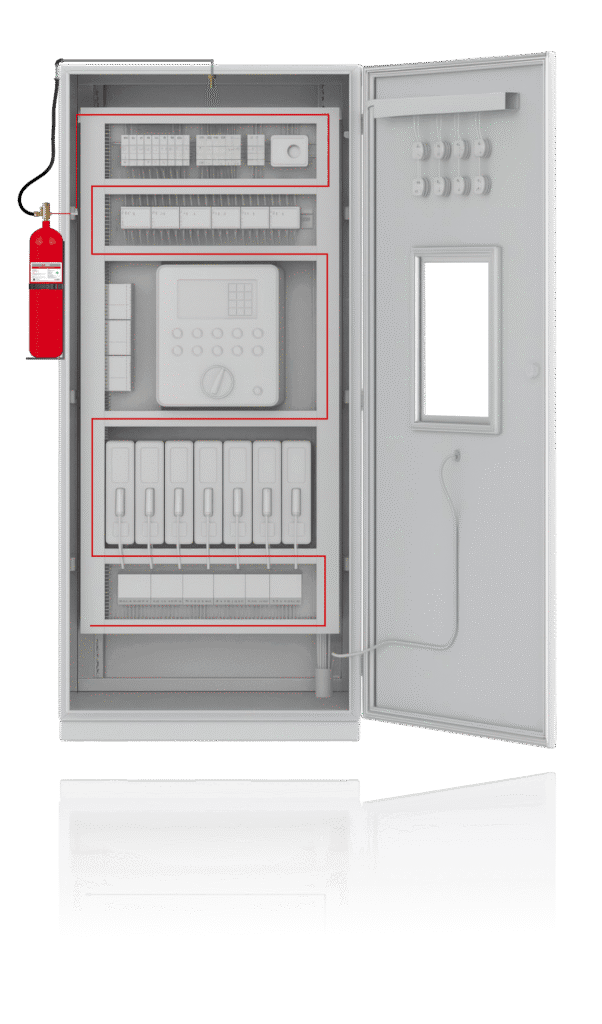
The agent is also used in micro-enclosure suppression, including high-pressure cylinder discharge into industrial cabinets.
Advantages of CO₂
• No residue after discharge; equipment can typically return to operation after ventilation.
• Effective on multiple fire classes, especially Class B and C.
• Non-conductive, allowing discharge onto energized electrical equipment.
• Suitable for harsh industrial environments where other clean agents may not perform well.
• Long history of documented use, testing, and performance data.
• Relatively low agent cost compared to halocarbons.
Limitations and Safety Concerns
CO₂ is effective but carries significant limitations and safety requirements that must be acknowledged.
1. Not safe for occupied spaces
CO₂ reduces oxygen to dangerously low levels.
Human exposure to design concentrations can cause:
• headaches
• impaired awareness
• unconsciousness
• respiratory arrest
Systems must incorporate:
• Pre-discharge alarms
• Time delays
• Evacuation protocols
• Lockout procedures
2. Requires sealed or semi-sealed environments
Total flooding systems need sufficient enclosure integrity to hold agent concentration.
3. High-pressure equipment
CO₂ cylinders are typically charged at 850 psi at 70°F (58 bar).
This requires:
• rated cylinders
• high-pressure fittings
• appropriate safety handling
4. Post-discharge ventilation is required
CO₂ must be evacuated before personnel re-enter.
5. Environmental considerations
While CO₂ has GWP = 1 (the reference baseline) and no chemical pollutants, its use still involves releasing pressurized CO₂, which has a carbon footprint.
Regulations vary by region regarding emissions, testing, and recharge requirements.
Is CO₂ Still a Good Choice?
CO₂ remains widely used in industrial settings due to its effectiveness and low cost.
However, it is not suitable for all applications, particularly:
• occupied rooms
• sealed IT spaces
• sensitive electronics where oxygen displacement poses a risk
Decision-making should consider:
• hazard type
• presence of personnel
• environmental footprint
• regulatory compliance
• alternative agents