
As global photovoltaic capacity approaches 3 terawatts, solar farm fire protection is becoming an increasingly important consideration for energy developers, operators, and asset managers. Beyond the photovoltaic arrays, the electrical infrastructure supporting solar generation—including inverters, switchgear, combiner boxes, and control cabinets—presents specific equipment-level risks that require careful assessment and appropriate protective measures.
Solar Power Is Expanding at Record Scale
Global solar energy deployment continues to reshape the electricity sector.
According to the International Energy Agency’s Photovoltaic Power Systems Programme (IEA PVPS), approximately 690 gigawatts (GW) of new solar photovoltaic capacity were installed worldwide in 2025, bringing cumulative global capacity to 2.96 terawatts (TW).
The September 2026 Trends in Photovoltaic Applications report recorded approximately 15% annual growth in new installations, with 36 countries adding more than 1 GW of solar capacity during the year.
These figures illustrate the scale of an industry that is no longer defined solely by the construction of new generating facilities.
Solar power has become a major component of global energy infrastructure, supported by increasingly sophisticated electrical equipment, power conversion technology, and distributed control systems.
As the installed base expands, maintaining the reliability and operational availability of these assets becomes just as important as developing additional generating capacity.
The long-term performance of a solar installation depends not only on its photovoltaic modules, but also on the electrical infrastructure that makes generation possible.
Where Solar Infrastructure Faces Fire Exposure
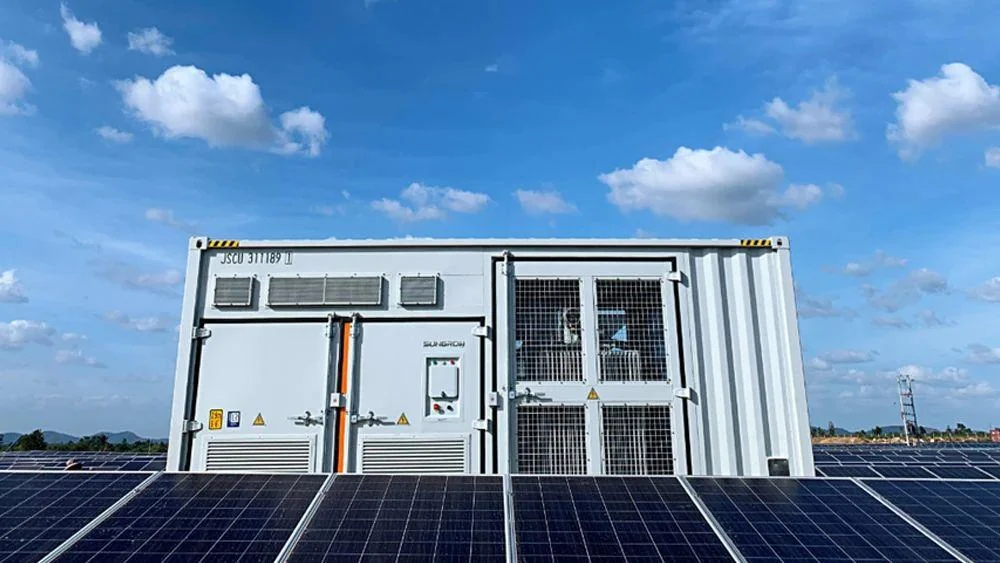
A utility-scale solar farm incorporates far more than photovoltaic panels.
Behind the generating arrays is a network of electrical components responsible for converting direct current, regulating electrical output, protecting circuits, and transmitting energy to the grid.
These include inverters, combiner boxes, switchgear, power distribution assemblies, and industrial control cabinets.
Although fires involving photovoltaic installations are relatively uncommon, electrical faults remain a recognized source of ignition.
Research published by the IEA PVPS Task 12 programme examined historical fire incidents involving photovoltaic installations in Germany between 1995 and 2012.
Of approximately 400 reported incidents in which PV equipment was present, investigators determined that photovoltaic components were responsible for initiating 180 fires.
The study identified the following distribution of ignition sources within those 180 incidents:
| Component category | Share of investigated fires |
|---|---|
| Inverters and power electronics | 25% |
| Electrical connectors and terminals | 24% |
| Junction boxes | 19% |
| Photovoltaic modules | 12% |
| Cables | 8% |
| AC and DC switches | 8% |
| Fuses | 4% |
Inverters, electrical connectors, and junction boxes collectively accounted for 68% of the identified ignition sources in this historical sample.
These findings should not be interpreted as current global failure rates. The research examined a defined group of historical incidents, and photovoltaic technology, installation practices, and safety standards have continued to evolve.
Nevertheless, the findings establish an important technical consideration: fire exposure within solar installations is not confined to the photovoltaic modules themselves.
The electrical equipment supporting power conversion and distribution also requires appropriate risk assessment, maintenance, and protective measures.
The Financial Importance of Electrical Equipment Reliability
For solar asset owners and operators, equipment reliability has direct financial consequences.
Electrical component failures can require specialist maintenance, component replacement, troubleshooting, and temporary interruption of generation.
In 2025, researchers from the National Renewable Energy Laboratory, Sandia National Laboratories, and the Electric Power Research Institute published a technical assessment examining the financial consequences of photovoltaic connector failures.
Using a modeled 100 MW solar installation, the research estimated approximately $71,933 in annual operation and maintenance costs associated with electrical connector issues, alongside an estimated $1.49 million in net present value of connector-related maintenance costs over the project’s operating life.
These figures represent a modeled reliability and maintenance scenario, not actual fire losses or savings attributable to fire suppression.
However, they reinforce the economic importance of electrical component performance in large-scale solar operations.
A major fire affecting critical power conversion equipment can introduce additional exposure through physical damage, equipment replacement, extended repairs, and lost generation.
The U.S. Department of Energy has also highlighted the potential expense and replacement challenges associated with specialized photovoltaic equipment, citing a $16,000 replacement-cost example for an inverter serving a 200 kW rooftop installation.
Actual replacement costs vary significantly with equipment capacity, manufacturer, configuration, and project requirements.
For operators managing solar assets over multiple decades, protecting the integrity of this infrastructure is therefore an important consideration in both risk management and operational planning.
Localized Fire Suppression: Protecting Equipment Where It Matters
Conventional solar fire safety strategies incorporate several preventive and protective measures, including proper electrical design, equipment certification, fault detection, circuit protection, thermal inspection, and routine maintenance.
These measures form the foundation of reliable operation.
For suitable enclosed electrical equipment, automatic localized fire suppression can provide an additional layer of protection.
Unlike large-area suppression installations, pre-engineered systems are configured to protect specific enclosures or defined equipment hazards.
Potential applications within solar infrastructure include:
- Inverter and power converter cabinets: Protecting suitable enclosed electrical and power electronic assemblies.
- Combiner and electrical junction cabinets: Addressing fire exposure within appropriately enclosed and assessed electrical compartments.
- Switchgear and distribution cabinets: Providing localized suppression around critical power distribution equipment.
- Control and automation enclosures: Protecting the electronics responsible for monitoring, operation, and equipment control.
The effectiveness of localized protection depends on the characteristics of the individual enclosure, including its internal volume, ventilation, environmental exposure, fire load, and the suitability of the extinguishing agent.
Not every solar electrical assembly is an appropriate candidate for cabinet-level suppression. Open-air connections, externally routed cables, ventilated equipment, and poorly sealed enclosures require separate assessment.
The purpose of localized fire suppression is not to replace electrical fault prevention, but to help limit the consequences of a fire within a defined, suitable protected volume.
Orbis Fire Suppression: Specialized Protection for Solar Electrical Infrastructure
At Orbis Fire Suppression, localized protection of critical electrical and industrial equipment is a central area of expertise.
Our pre-engineered fire suppression technologies are designed to address fire hazards within suitable enclosed environments, providing compact, automatic protection without the complexity of a larger room-level suppression installation.
For solar infrastructure, the objective is to integrate appropriately selected fire protection into the electrical equipment supporting generation, conversion, and distribution.
Orbis offers two principal pre-engineered system configurations.
Direct Low Pressure (DLP) Systems
Orbis DLP systems utilize heat-sensitive detection tubing routed within the protected enclosure.
When exposed to sufficient heat from a fire, the tubing ruptures, triggering discharge of the extinguishing agent directly through the opening.
The system operates mechanically, without relying on external electrical power for automatic activation.
This configuration can be particularly relevant to compact electrical cabinets, remote equipment installations, and suitable enclosures where a self-contained suppression system is preferred.
Indirect Low Pressure (ILP) Systems
Orbis ILP systems separate fire detection from agent distribution.
Upon actuation, the suppression agent is discharged through a dedicated network of nozzles positioned within the protected enclosure.
Depending on the selected configuration, activation can be achieved through heat-sensitive detection tubing, electrical actuation, or manual release.
This approach provides greater flexibility in discharge arrangement and is particularly relevant to equipment enclosures with more complex internal layouts.
Clean-Agent Protection for Electrical Equipment
Orbis pre-engineered configurations are available with clean-agent options such as FK-5-1-12 and HFC-227ea, subject to application and system compatibility.
These agents are electrically non-conductive and leave no agent residue following discharge, making them appropriate for certain sensitive electrical and electronic applications.
However, agent selection and system design must account for the protected hazard, enclosure conditions, environmental requirements, and applicable design standards.
For solar operators and equipment manufacturers, Orbis provides a practical approach to incorporating specialized fire suppression into eligible electrical assemblies, supported by system configuration expertise, technical documentation, and application-focused assistance.
Integrating Fire Protection Into the Solar Project Lifecycle
As solar installations become larger and more geographically distributed, the opportunity to evaluate equipment-level fire protection extends across the entire project lifecycle.
For solar developers and EPC contractors, fire protection can be considered during electrical system design and equipment procurement.
For inverter and electrical equipment manufacturers, suitable pre-engineered suppression configurations can be evaluated as part of equipment integration or OEM protection packages.
For existing solar farm operators, selected electrical cabinets and control systems may be candidates for retrofit protection, provided their enclosure characteristics and operating conditions satisfy the system’s design requirements.
Any installation must be evaluated against environmental exposure, maintenance accessibility, electrical isolation requirements, and the applicable fire protection criteria.
Cabinet-level clean-agent systems do not provide comprehensive protection against every solar fire scenario, including external photovoltaic array fires or battery thermal runaway. These hazards require distinct protective strategies.
The value of pre-engineered suppression lies in its ability to provide defined, localized protection for suitable equipment—not in treating an entire solar installation as a single hazard.
Protecting the Infrastructure Behind Solar Growth
The addition of approximately 690 GW of solar capacity in a single year illustrates the pace at which global photovoltaic infrastructure is expanding.
Yet the commercial performance of these investments will ultimately depend on more than their installed generating capacity.
Equipment reliability, operational availability, maintenance efficiency, and resilience against equipment damage will continue to influence the long-term performance of solar assets.
Historical fire investigations demonstrate that electrical and power conversion components deserve careful attention within solar fire-risk assessments. More recent reliability research reinforces the measurable costs associated with maintaining these systems.
For the solar industry, integrating appropriate fire protection into equipment design and asset management is therefore a practical consideration—not simply a response to regulatory obligations.
Orbis Fire Suppression supports this objective through specialized, pre-engineered fire suppression solutions designed for critical electrical and industrial enclosures.
As solar power continues to expand, protecting the infrastructure responsible for delivering that energy remains an essential part of safeguarding the investment behind it.
Sources & References
1. International Energy Agency Photovoltaic Power Systems Programme (IEA PVPS), September 2026. Trends in Photovoltaic Applications 2026. Global installation figures, cumulative photovoltaic capacity, and international market developments.
2. IEA PVPS Task 12, 2017. Photovoltaics and Firefighters’ Operations: Best Practices in Selected Countries. Historical German incident analysis and electrical component ignition-source distribution, Section 1.2.
View IEA PVPS technical report
3. Walker, A., Ramasamy, V., Desai, J., et al., 2025. Impacts of PV Module Connector Failures on Cost and Performance of Utility Scale Photovoltaic Systems. NREL/Sandia/EPRI research, DOI: 10.2172/2583534.
4. U.S. Department of Energy. Solar Photovoltaic Hardening for Resilience – Wildfire. Specialized equipment replacement considerations and photovoltaic asset resilience.
5. If Insurance. Put Your Roof to Work in a Safe Manner. Insurer guidance on photovoltaic electrical fire hazards, inverters, combiner boxes, and fire protection measures.