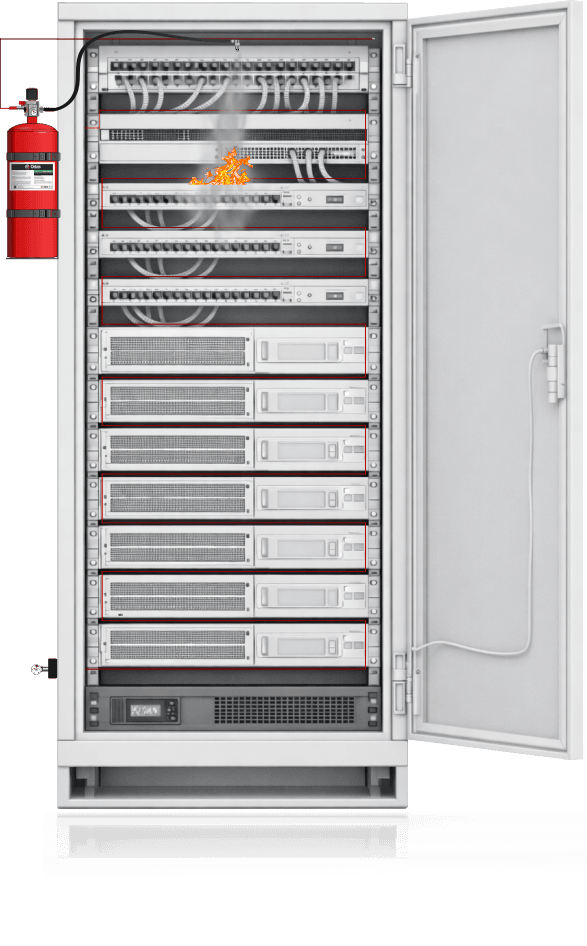
The ILP system is configured to respond through one or more actuation pathways depending on project requirements. Typical release methods include:
• heat-sensitive detection tubing • smoke or gas detection through a releasing/control panel • manual release station actuation
2. Release Signal Initiates Valve Operation
When the initiating condition is met, the ILP valve assembly is actuated pneumatically, electrically, or manually, depending on the system configuration. This opens the cylinder for discharge.
3. Agent Is Routed Through the Discharge Network
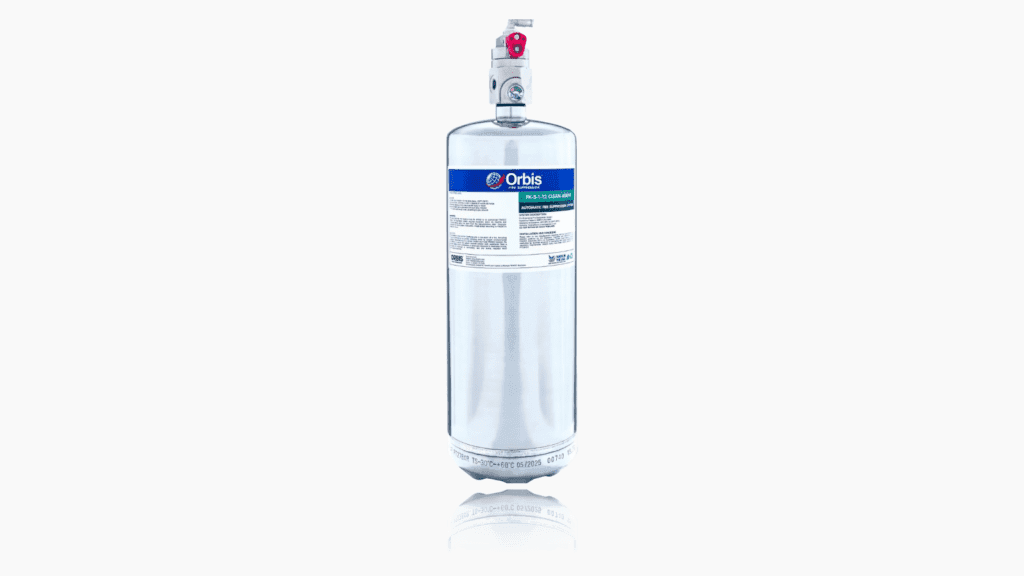
Unlike direct systems, the extinguishing agent is not discharged through the detection tube. The agent is routed from the cylinder through dedicated discharge lines to fixed nozzles installed within the protected enclosure.
4. Nozzles Distribute Agent Within the Hazard
The nozzle network distributes the suppression media across the protected enclosure, allowing broader and more controlled coverage for larger or more complex assets.
5. Fire Is Automatically Suppressed
The released agent suppresses the fire within the enclosure while helping reduce damage escalation, downtime, and spread to adjacent components. This architecture is suited to cabinets and enclosed systems where a single direct discharge point is not sufficient.
Technical Specifications
System Characteristics
Available Suppression Agents
Cylinder Platform
Operating Class
Discharge Architecture
System Characteristics
System Type: Indirect low-pressure pre-engineered suppression
Discharge Method: Dedicated nozzle network
Cylinder Placement: Internal, adjacent, or external
Coverage Style: Distributed enclosure discharge
Design Basis: Single enclosed hazard protection
System Configuration: Self-contained and pre-engineered
Available Suppression Agents
FK-5-1-12
HFC-227ea
CO₂
ABC Dry Powder
Cylinder Platform
Cylinder Construction: Stainless steel and compliant carbon steel cylinder options
Compliance Pathways: DOT, CE, and TPED export-ready configurations
Mounting Options: Internal, adjacent, or external enclosure mounting
Pressure Indication: Integrated pressure gauge and optional pressure switch
Nominal Working Pressure: 195 psi class (13.4 bar) for clean agents
Temperature Range: –20°C to +65°C configuration dependent
Power Requirement: None for pneumatic/manual release
Electrical Release: 24 VDC solenoid option available
Activation Modes: Pneumatic, electrical, or manual
Discharge Architecture
Discharge Method: Fixed nozzle network
Nozzle Options: Cone and directional discharge patterns
Coverage Style: Distributed enclosure protection
Cylinder Placement: External cylinder with internal nozzle routing
Detection Compatibility: Tube, smoke, gas, and manual release interfaces
Applications
Electrical Cabinets & Control Panels
Protects against electrical faults, short circuits, and overheating. Installs directly inside panels to automatically suppress fires before they spread, minimizing downtime and equipment loss.
Prevents costly fire damage from overheated motors, lubricants, or electrical malfunctions. Compact systems fit inside machinery housings and enclosures, offering rapid, localized suppression.
Addresses fire hazards caused by thermal runaway, electrical faults, and overheating in battery systems. Ensures fast-acting protection for lithium-ion or lead-acid battery cabinets.
Safeguards vehicles, generators, and mobile equipment from engine fires, fuel leaks, and electrical shorts. Ideal for buses, trucks, mining vehicles, and critical backup power systems.
Provides round-the-clock protection for remote telecom, data, and power enclosures, especially in unmanned or harsh environments where response time is critical.
Controls fires resulting from spills, leaks, or ignition of stored chemicals and solvents. Compatible with cabinets for paints, thinners, and cleaning agents.
How can we help you with fire protection solutions today? If you have any questions about our products, services, or distributor opportunities, just send us a message. We’re here to help.
Contact Us
🟢 Online | Privacy policy
Contact Us
Thank you for reaching out to Orbis®.
We’ve received your message and a member of our team will get back to you shortly.