
Direct Fire Suppression System (DLP): Protecting Enclosed Equipment with Tube-Based Suppression
December 3, 2025 | Orbis Fire Suppression | 7 min read
In industrial and commercial settings, many fire hazards originate in enclosed micro-environments – think of electrical control panels, CNC machine cabinets, battery enclosures, or telecom closets. A fire starting inside one of these cabinets can smolder undetected until it grows, at which point traditional room sprinklers or detectors might respond too late. This is where a direct fire suppression system shines. A direct system, often referred to as a Direct Low Pressure (DLP) tube-based suppression system, detects and extinguishes a fire right at the source inside the equipment. It uses a small heat-sensitive polymer tube installed within the enclosure to automatically sense a fire and instantly release a clean extinguishing agent on the flames. Because DLP systems are self-activating and require no electricity, they provide 24/7 autonomous protection even in power outages or remote locations. Industry standards (such as NFPA 75 for IT equipment) underscore the importance of such localized protection, recommending clean-agent systems within electrical cabinets to prevent fires and minimize damage. In short, direct tube-based suppression is a crucial safeguard for high-risk enclosed equipment, delivering fast, pinpoint fire defense that preserves both the equipment and the surrounding facility.
How DLP Tube-Based Suppression Works
A Direct Low Pressure (DLP) fire suppression system is a self-contained, tube-based solution engineered for automatic fire detection and suppression inside an enclosure. It operates through a heat-sensitive polymer tube that is pressurized and routed through the protected cabinet. This single tube serves dual purposes – it constantly senses heat along its length, and it will also act as the discharge outlet for the extinguishing agent. Here’s how a typical direct fire suppression system works:
- Heat Detection: The flexible detection tube is strategically installed around high-risk components inside the enclosure. The tube is pressurized (with dry nitrogen) and monitors for a sharp rise in temperature.
- Tube Rupture at Fire Source: If a fire breaks out, the intense heat (around 110 °C or direct flame contact) causes the polymer tube to soften and rupture at the hottest point. The tube essentially bursts open exactly where the flames or high heat are touching it.
- Instant Agent Discharge: The moment the tube ruptures, the pressure drop in the line triggers the connected valve to open. The suppression agent – typically a clean agent – is then immediately released through the tube’s break. The tube opening becomes a nozzle, spraying the agent directly onto the fire at its source. Common agents used are clean, electronics-safe chemicals like FK-5-1-12 (also known as Novec 1230) or HFC-227ea (FM-200), which are non-conductive and leave no residue.
- Fire Suppressed at the Source: The fire is quickly flooded with the clean agent and knocked down in its earliest stage. Because the discharge happens exactly where the fire ignites, suppression is extremely rapid, often within seconds, preventing the fire from spreading beyond the equipment. The entire process is fully automatic: no electrical detection circuit or human intervention is needed to detect or activate the system. Once the agent is discharged and the fire is out, only the affected tube segment and cylinder need servicing.
In essence, a DLP system provides direct and localized fire suppression. The moment flames or high heat are present inside a protected cabinet, the system self-activates and surgically extinguishes the fire right at its origin. This contrasts with indirect or room-based systems that would discharge agent through separate nozzles or flood an entire room. By using the tube as both the sensor and the delivery mechanism, DLP systems achieve an elegantly simple design with very fast response. As one fire protection provider describes, the detection tubing will rupture at ~110 °C and instantly discharge the agent at the point of fire – exactly the principle that DLP systems employ for reliable 24/7 protection.
Key Benefits of DLP Fire Suppression Systems
Direct tube-based suppression offers several key advantages over traditional fire protection in these small enclosures. The DLP system design brings unique benefits in terms of simplicity, speed, and effectiveness:
- No Power or Electronics Required: DLP systems are entirely pneumatic and mechanical. The heat-sensitive tube and pressure-driven valve eliminate the need for any electrical power supply, detection panel, or wiring. This means the system remains operational even during power failures and doesn’t depend on any electronic sensors. The tube itself detects the fire and triggers suppression, providing true stand-alone protection. (In fact, DLP is often described as “self-activating”, since it works automatically 24/7 with no electricity or human input needed.)
- Minimal Maintenance Burden: With no moving parts or electronic detectors to calibrate, DLP systems impose virtually zero maintenance burden on facility staff. Routine upkeep is limited to simple periodic checks – e.g. visually inspecting the tube and confirming the pressure gauge is in range, typically done a couple of times a year. There are no filters to change or sensors to clean. This low-maintenance nature not only reduces life-cycle costs but also removes the risk of human error in forgetting a maintenance step. The systems have a long service life with just basic inspection.
- Fast, Automatic Response: DLP systems react at the earliest stage of a fire. The tubing will burst almost immediately when exposed to a sharp heat increase or flame, so suppression begins within seconds of ignition. This rapid response can extinguish a fire before it grows or causes major damage. In contrast, a traditional sprinkler or smoke detector might activate only after heat or smoke has escaped the enclosure. By catching a fire right at its start inside the cabinet, DLP drastically limits the damage and downtime caused by an incident. The localized discharge ensures the fire is knocked down quickly, often before any significant spread, which is critical for high-value equipment protection.
- Localized & Targeted Suppression: A direct fire suppression system delivers the agent exactly where it’s needed, directly onto the source of the fire and nowhere else. This localized approach confines the suppression to the affected equipment only. It means the rest of your facility or room is not exposed to the agent discharge, and undamaged equipment isn’t needlessly disrupted. By extinguishing the flame inside the device that caught fire, DLP prevents the fire from spreading to nearby devices and avoids collateral damage. This targeted method also makes cleanup easier (since the clean agents used evaporate without residue) and allows quick restoration of the specific equipment after a minor incident.
- Clean Agent, No Mess: DLP systems typically use clean extinguishing agents like FK-5-1-12 (Novec 1230) or HFC-227ea (FM-200), which are safe for electronics, non-corrosive, and leave zero residue. Unlike water or powder extinguishers, these agents won’t damage circuit boards or machinery. They dissipate after discharge without requiring intensive cleaning. This is a huge advantage for protecting sensitive electrical and electronic gear. The fire is put out without destroying the very equipment you’re trying to save. Additionally, these clean agents are human-safe in the small quantities used and have no ozone depletion potential, aligning with environmental and safety standards.
- Simple Installation in Tight Spaces: DLP tube systems are compact and easy to install within equipment enclosures. There are no elaborate nozzle plumbing networks to design; the flexible tube snakes through the cabinet and is secured with clips near hazard points. The cylinder of agent can be mounted beside or inside the enclosure. With no need for separate detectors or wiring runs, setup is straightforward. This makes DLP ideal for retrofitting into existing panels or machines where space is limited. The simplicity of the system translates to lower installation and commissioning costs. As a result, DLP solutions are often more cost-effective than traditional systems – eliminating nozzles, piping, and electrical components significantly cuts material and labor costs without compromising safety.
In summary, a DLP direct fire suppression system offers reliability through simplicity. It provides automatic, immediate fire protection without power, requires almost no maintenance, and focuses the firefighting agent precisely where the threat is, ensuring minimal damage and downtime when compared to conventional fire systems. These benefits make DLP an increasingly popular choice to safeguard valuable equipment and maintain business continuity.
Technical Details and System Specifications
For those interested in the technical specs, below are some key details of a typical DLP tube-based suppression system:
- Activation Temperature: The detection tubing ruptures at approximately 110 °C (around 230 °F) when exposed to fire heat. In practice, if flames or intense heat impinge on the tube, it will burst and trigger the system. (Different tubing materials can have activation ranges from ~110°C up to ~170°C, but ~110°C is common for most direct systems as it ensures quick activation well before a fire grows large.)
- Operating Pressure: The polymer tube is pressurized with inert gas (nitrogen) to a normal operating pressure around 13.4 bar (approximately 195 PSI) for optimal sensitivity. This pressure ensures the tube will burst promptly at the design temperature. The system is typically designed to function in a pressure range (for example, 11-23 bar in the tube) to accommodate temperature fluctuations, with 13.4 bar being the set point for best performance. The storage cylinder containing the clean agent is also pressurized (often with a nitrogen propellant). For DLP systems this is a low-pressure cylinder (on the order of 25 bar, much lower than large engineered systems that may use 42 bar cylinders).
- Clean Suppression Agent: DLP systems employ clean agents that are electrically non-conductive and safe for sensitive equipment. Common choices are FK-5-1-12 (commercial name Novec™ 1230) or HFC-227ea (FM-200), both of which swiftly suppress fire via heat absorption and chemical interference without leaving residue. These agents are stored as liquefied gas under pressure and convert to vapor when released, flooding the small enclosure and quenching the flames. They are environmentally friendly (zero ozone depletion; FK-5-1-12 has a global warming potential of 1) and safe for occupied areas in the small amounts used for micro-environment protection.
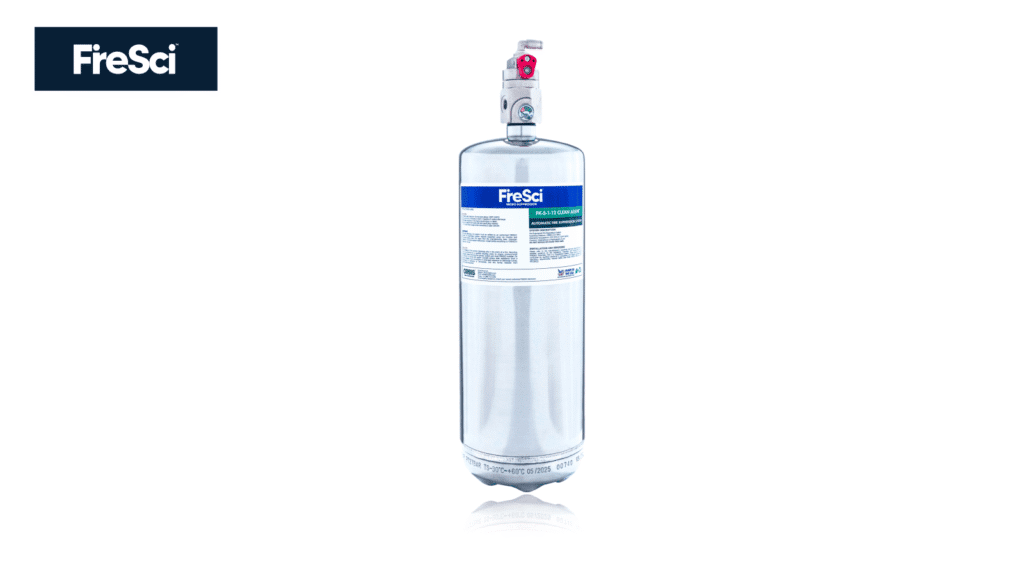
- Component Design & Certifications: A DLP system consists of a small cylinder (ranging from ~1 to 9 kg agent capacity typically), a pressure gauge and valve assembly, and the detection tubing network with fittings. Despite its simplicity, the system is built to strict safety standards. For example, Orbis Fire’s DLP cylinder valve is TPED certified (2010/35/EU) for pressure equipment safety in Europe, and DLP units carry CE marking as well as compliance with U.S. DOT requirements for transport of the pressurized cylinder. Many such systems also utilize UL-listed components and meet NFPA clean agent system standards. In fact, modern tube-based suppression systems are designed to align with major fire protection standards like NFPA 2001 (Standard on Clean Agent Extinguishing Systems) and ISO 14520, and their components adhere to regulations from agencies such as UL, FM, DOT, and TPED. This means when you install a DLP system, you’re getting a solution that has been tested and approved to the same rigorous standards as other fire suppression systems, ensuring reliability and regulatory compliance.
- Typical Discharge and Reset: Upon activation, the DLP system will completely discharge the agent in the cylinder through the ruptured tube, flooding the enclosure rapidly. Discharge times are usually on the order of just seconds (e.g. 5-15 seconds to empty the cylinder, depending on size), fast enough to snuff out the fire promptly.
All these technical features combine to make the DLP system a robust and fail-safe solution for small-scale fire hazards. The use of a pre-engineered design means everything from the rupture temperature to the pressure ratings and agent quantity is carefully specified to achieve reliable results. Furthermore, having internationally recognized certifications (UL, CE, TPED, etc.) and compliance with standards like NFPA 2001 gives confidence that the system will perform as expected in an emergency.
Real-World Applications of Tube-Based Suppression
Direct tube-based fire suppression is ideal for protecting a wide array of industrial and commercial micro-environments. Essentially, any critical equipment enclosed in a cabinet or compartment can benefit from its own self-activating fire suppression. Here are some practical use cases where DLP systems excel:
- Electrical Panels & Control Cabinets: Electrical distribution panels, PLC cabinets, and machine control boxes are rife with wires, circuit breakers, and power supplies that can spark or overheat. A fire inside a control cabinet can cause extensive downtime or even spread along cable trays. Installing a DLP suppression unit inside the panel ensures that if an electrical fire ignites, it is immediately detected and extinguished within the cabinet. This prevents the fire from escaping the enclosure and protects the surrounding facility. Because no water is used, there is no additional damage to electronics. DLP systems in electrical panels are increasingly considered best practice for mission-critical facilities (data centers, manufacturing plants, etc.) to stop arc-flash or short-circuit fires at the source.
- CNC Machines & Industrial Machinery: CNC machines, EDM machines, and other automated manufacturing equipment often use flammable coolants or generate significant heat during operation. If a tool misfires or a workpiece catches fire inside the machine, it can be very dangerous and costly. A tube-based suppression system installed in the CNC machine’s cabinet will automatically snuff out any fire right where it starts (in the machining area or electronics bay). This protects expensive machinery from fire damage and prevents the fire from spreading to the factory floor. Importantly, it does so without requiring human intervention – critical since machine fires can start even when operators are not immediately present. Many industrial equipment OEMs and users are adopting DLP systems for this localized, automatic fire protection that doesn’t interfere with the machine’s normal operation.
- Battery Enclosures and UPS Systems: Energy storage systems (like lithium-ion battery cabinets, UPS backups, or battery banks) pose a fire risk due to potential thermal runaway. These battery enclosures are confined spaces that can quickly build heat if a cell overheats. DLP suppression is an excellent solution here: the detection tube will rupture as soon as a battery starts to overheat and flame, directly flooding that battery module with clean agent to cool and temporarily extinguish it. This can halt a chain reaction in a battery rack, limiting fire spread to other cells. By knocking down battery fires early and cleanly (no water on lithium batteries), DLP systems help prevent catastrophic energy storage fires. They are increasingly used in battery energy storage system (BESS) containers, telecom backup battery cabinets, and large UPS room cabinets for critical facilities.
- Server Racks and Telecom Cabinets: In IT and telecom infrastructure, uptime is critical and even a small fire can lead to costly outages. DLP fire suppression can be deployed inside server rack enclosures, network cabinets, and telecom relay cabinets. If a server power supply or a telecom device were to spark a flame, the tube inside that rack will burst and instantly extinguish it, protecting the rest of the data center or telecom site. This localized approach is far preferable to relying on a room’s fire system, which might dump suppressant across an entire data hall. Tube-based systems have been effectively used in telecom BTS shelters, data center rack rows, and cable hubs, as they provide fast, localized suppression without bulky equipment or room flooding. For critical applications like 5G equipment or edge computing cabinets, a DLP unit adds a layer of safety that keeps small fires from becoming big network disasters.
- Vehicle and Engine Compartments: (Beyond building installations, it’s worth noting that direct tube systems are also used in vehicle engine bays, heavy equipment, and generator housings. The concept is the same, if an engine fire ignites, the tube bursts and dumps agent under the hood. This use case, common in mining vehicles, transit buses, etc., underscores the versatility of DLP systems. They can protect any confined space where a fire might erupt, even in mobile or harsh environments. While our focus here is on stationary equipment, this illustrates the broad applicability of tube-based suppression.)
In all these scenarios, DLP systems are favored because they are self-contained, quick, and targeted. Traditional fire sprinklers or room systems either don’t reach inside the equipment, or would act only after the fire has grown and spread. By contrast, a tube-based direct suppression system is built into the enclosure itself, so it intervenes at the earliest sign of trouble. This makes DLP the superior choice for protecting valuable equipment and maintaining uninterrupted operations in these real-world applications.
DLP vs. Traditional Fire Suppression Systems
How does a direct tube-based system compare to more conventional fire suppression setups? In many enclosed micro-environment applications, DLP offers clear advantages over traditional systems:
- Immediate Detection vs. Delayed Response: DLP systems detect fires at the point of origin, using heat to trigger the tube. This means a fire is caught as soon as it generates significant heat (around 110 °C) right next to the hazard. Traditional suppression relies on ambient detectors (smoke or heat detectors in the room) or sprinkler heads. Those might not activate until after smoke or heat has escaped the cabinet, which slows down the response. For example, a smoke detector in a server room may not sense a small fire confined inside a server rack until the rack door vents smoke, whereas a DLP tube inside that rack would have already ruptured and activated. Likewise, sprinklers typically trigger at ~155-180 °F (68-82 °C) outside the equipment. By the time heat from a small enclosure reaches a ceiling sprinkler, the fire is quite large. DLP’s immediate, in-situ detection leads to suppression that can be dozens of seconds (if not minutes) faster, making a huge difference in limiting damage.
- Targeted Release vs. Total Flooding: Traditional clean agent systems are often total flooding designs – they dump a large volume of agent to achieve a concentration in an entire room or closed area. This means if a tiny fire starts in one cabinet, the whole room’s system might discharge, using a lot of agent and halting operations room-wide. DLP, on the other hand, discharges only in the affected enclosure, using a relatively small amount of agent to put out the fire at its source. This targeted approach is more efficient and avoids exposing other personnel or equipment to suppressant unnecessarily. It also means after a DLP activation, only one small cylinder needs recharging and typically only one cabinet experiences brief interruption – not an entire facility. In short, DLP minimizes business disruption: a fire in one machine triggers that machine’s suppressor, and everything else can continue running normally.
- Simplicity vs. Complexity: A conventional fire system for protecting equipment might involve multiple components – detectors, control panels, alarms, suppression agent storage, piping, and discharge nozzles throughout the room. These engineered systems are effective for larger areas, but they are complex to install and maintain. In contrast, a DLP system is extremely simple: no electrical detectors, no extensive pipe network, no nozzle placement study – just the cylinder, tube, and a pressure actuator. The tube itself acts as the detector and delivery device. Fewer parts not only reduce installation cost but also mean fewer potential points of failure. Maintenance and inspections are straightforward (mostly visual checks) compared to the periodic electronic testing and calibration required for traditional systems. This simplicity gives DLP an edge in reliability; there are very few things that can go wrong or cause a false discharge. And if the system ever needs to be relocated or the protected equipment is reconfigured, it’s far easier to reroute or reinstall a small tubing system than to redesign an entire fixed suppression network.
- Autonomous Operation in All Conditions: Traditional fire suppression (like an FM-200 room system or a CO₂ system) typically depends on electronic detection and control – e.g. smoke detectors trigger a control panel, which then opens an electric valve or activates a release. If the control panel loses power or an electronic component fails, the system might not fire. DLP systems are completely mechanical and pneumatic, so they will operate under virtually any conditions as long as the tube remains intact and pressurized. This makes them extremely reliable even in remote sites or during facility power shutdowns. They also don’t require any integration with alarm circuits unless desired. (However, DLP systems can be complemented with an optional pressure switch to signal an alarm when they discharge, giving you the best of both worlds: pneumatic actuation with an electrical notification.)
- Reduced Water Damage Risk: In scenarios where the alternative is a sprinkler system, DLP’s advantage is clear – no water is involved. Sprinklers are disastrous for electronics and many sensitive machines; the water can often cause more damage to equipment than the fire would! A tube-based clean agent system avoids this completely, using agents that evaporate clean. Therefore, in electrical and electronic enclosures, DLP is a far superior choice to adding a sprinkler head, which one would generally avoid due to the collateral damage water would bring. Insurance and safety codes recognize this, which is why clean agent systems (like DLP) are recommended for high-value electrical spaces where sprinklers are undesired.
To be fair, traditional suppression systems (like larger indirect clean agent systems or sprinkler networks) still have their place, for example, in protecting entire rooms, large machinery spaces, or occupied areas. DLP systems are not meant to replace building-wide fire systems for large volumes. Instead, they complement the overall fire protection strategy by covering the micro-level hazards that big systems might miss or handle less optimally. In those certain applications where a fire risk is localized inside equipment, DLP is the superior choice. It offers a combination of speed, precision, and autonomy that conventional systems cannot match in that context. As one industry source notes, these “self-contained tube-style systems” are highly effective for small enclosures since they provide localized suppression without bulky equipment or extensive installation – an apt summary of why DLP has the edge for cabinet-level protection.
Conclusion: Reliable, Autonomous Protection Made Simple
Direct Low Pressure fire suppression systems bring together reliability, autonomy, and simplicity to protect today’s high-value equipment. By using a humble polymer tube as a smart fire sensor and delivery mechanism, DLP systems achieve what every safety engineer seeks: a fast-acting, fail-safe response that stops a fire right where it starts, with minimal collateral impact. For facilities with critical electrical panels, machinery, or battery systems, deploying direct fire suppression inside those enclosures means peace of mind that even a hidden spark will be swiftly dealt with before it can escalate. The DLP approach embodies the philosophy of “protecting at the source”, and its proven performance in real-world applications has made it an increasingly standard solution for enclosures across industries.
Orbis Fire’s DLP systems, for instance, are engineered and certified to the highest standards, but what truly sets them apart is their ease of integration into your operations – they require no external infrastructure and virtually no maintenance, yet they stand guard 24/7. This combination of set-and-forget reliability and rapid extinguishing capability makes tube-based DLP suppression a powerful asset in any fire protection plan. Whether you manage a data center full of server racks, a manufacturing floor with automated machines, or a power facility with battery banks, direct fire suppression can be the difference between a minor incident and a major catastrophe.
Protect what matters at the source. Consider implementing DLP tube-based systems in your critical enclosures to fortify your fire safety strategy. For more information on direct fire suppression systems or to discuss how these solutions can be tailored to your needs, contact Orbis Fire. We’re also happy to work with new partners – if you’re interested in offering our DLP and other fire protection solutions, reach out about distribution opportunities. By embracing innovative protections like DLP, you’ll be taking a proactive step toward safer operations and uninterrupted uptime – a smart move for any forward-thinking organization.
“Direct fire suppression systems are more than a product category, they’re a philosophy of stopping fires at the source, before they disrupt lives, machines, or operations. At Orbis, we build systems that work autonomously, reliably, and without compromise. This article reflects our commitment to technical transparency and real-world relevance, because we believe that knowledge drives better decisions, safer installations, and stronger fire resilience across industries.”
— Luke De Gaetani, Vice President – Operations, Orbis Fire Suppression